Sujud, or prostration as it is known in English, is a posture in prayer to be done as a religious obligation. It is one of the important actions in our salah, humbling ourselves, submitting to Allah, as taught by the Prophet Muhammad (peace & blessings be upon him). Sujud is performed in the lowest positions and movements during prayer. There are 7 body parts in contact with the ground during sujud.
Prophet Muhammad has always taught us to perform it in the best manner, the way he performed it. Anas ibn Malik (may Allah be pleased with him) said: “We used to pray with the Prophet (peace and blessings of Allah be upon him) when it was very hot, and if one of us could not place his forehead firmly on the ground, he would spread his garment out and do sujud on it.”[1] This hadith signifies how Prophet Muhammad (peace & blessings be upon him) emphasized doing it correctly by placing his forehead firmly on the ground.
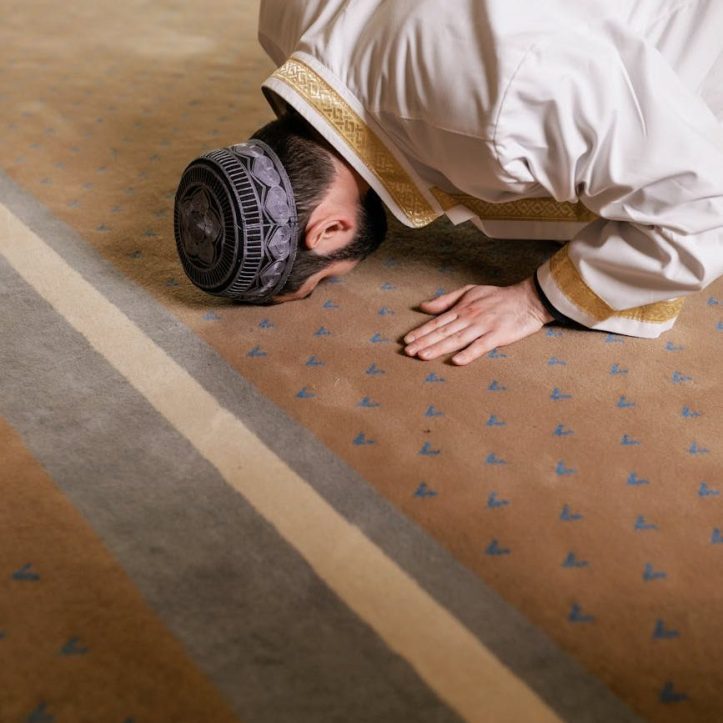
Undeniably, there are an abundance of benefits of sujud to a person, spiritually and physically. In this article, we would like to invite you to ponder several underlying medical and physical benefits of this action, as we are being taught by the Prophet. We not only get the reward of following the footsteps of the Prophet, but it also brings benefits to our bodies.
- It Enhances Blood Circulation.
During sujud, the head is positioned below the heart, which enhances blood flow to the brain. This increased circulation supports cognitive functions like memory and concentration. According to research, sujud is unique in being the only posture where the head is lower than the heart, allowing for an elevated supply of blood to the brain. This stimulates the brain’s frontal cortex, potentially reducing the risk of headaches, brain hemorrhages, and high blood pressure. The increased blood flow also positively influences mental clarity, focus, mood, and overall cognitive performance. Additionally, a study on brain activity during prostration showed heightened alpha wave amplitude in the parietal and occipital lobes, suggesting activation of the parasympathetic nervous system and a state of deep relaxation. [2]
Narrated from Aisha (may Allah be pleased with her), Prophet Muhammad (peace & blessings be upon him) used to prolong the prostration to such an extent that one could recite fifty verses (of the Qur’an) before he would lift his head.[3]
2. Spinal Health
In sujud, the lower back remains flexed while the forehead rests gently on the ground. This position activates the postural muscles of the neck, helping to maintain a neutral head alignment during both the descent and ascent. Meanwhile, the toes, entire spine, and supporting muscles of the upper and lower back undergo a gentle stretch. This spinal elongation can relieve tension, alleviate back pain, and enhance flexibility. As the torso folds over the legs, space is created between the vertebrae, promoting spinal decompression, nerve gliding, and elongation of the spinal nerves. When practiced regularly and in combination with other exercises, this posture can help open the lumbar facet joints, reduce lower back pain and sciatica, and offer therapeutic benefits for conditions like spinal stenosis and degenerative disc disease.[4].
3. Joint Mobility
Narrated ‘Abdullah bin Malik (may Allah be pleased with him), “When the Prophet prayed, he used to separate his arms from his body so widely that the whiteness of his armpits was visible”.[5] This suggests that one should maintain a wide posture while praying and keep their arms away from their body.
The Prophet also said, “Do the prostration properly and do not put your forearms flat with elbows touching the ground like a dog. [6] In sujud, the hands are supposed to be stretched out in a manner that allows the forearm as well as the arm muscles to bear weight. The hip joints were also in maximum flexion during the prostration posture. The continuous overall movements mentioned above and regular practice help maintain flexibility in joints, reducing stiffness and promoting overall joint health.
4. Digestive Benefits

This posture may support digestive health by gently stimulating the abdominal organs. Sujud provides various physical and physiological benefits, one of which includes aiding digestion. By positioning the head below the heart, sujud enhances blood circulation not only to the brain but also to the abdominal region. This improved blood flow can help optimize the function of key digestive organs such as the stomach, intestines, and liver.
Sujud slightly compresses the abdomen, which may gently massage the internal organs. This light pressure can stimulate peristalsis. The bowing and prostrating positions involve flexing and extending the abdominal area, which can help release trapped gas and reduce bloating. Sujud is associated with mindfulness and deep breathing, which activate the parasympathetic nervous system. This reduces stress and anxiety, and can improve digestive efficiency and help with issues like indigestion.
Regular sujud helps maintain flexibility and strengthens core muscles, indirectly supporting gut health by reducing pressure from poor posture or weak abdominal support.
The body goes through a unique exercise routine during sujud; therefore, these postures help to maintain fitness in healthy individuals, leading to improved flexibility, muscle strength, and muscle endurance.
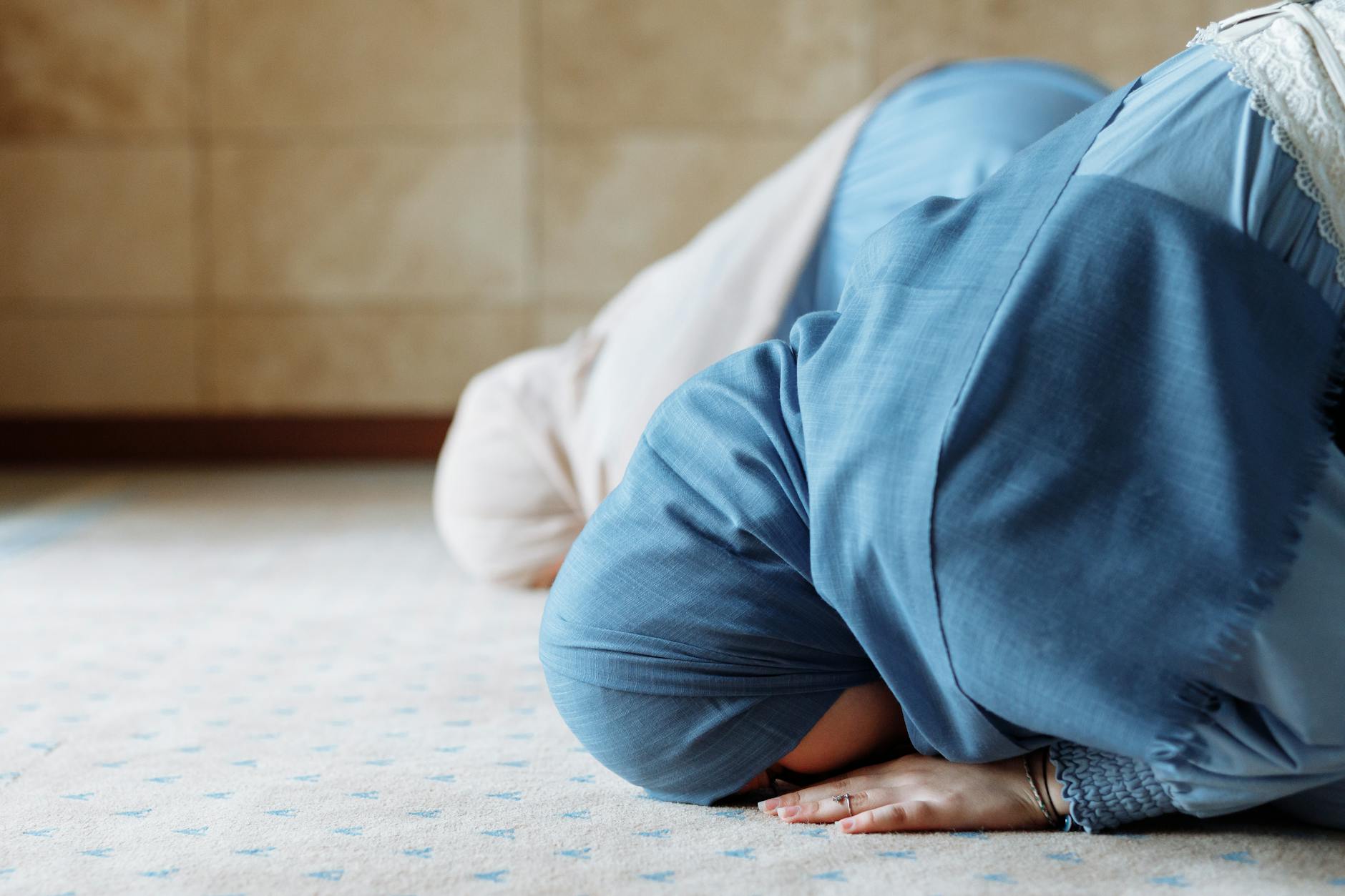
If performed properly and regularly, sujud can be very useful to aid rehabilitation in a variety of conditions. As part of a spiritual act, the doers also perform slow and moderate exercise at the same time, which could benefit their health.
Public health awareness about these benefits is crucial to ensure our Muslim ummah gains the maximum physical health benefits associated with the correct manner of performing prayer, especially sujud, as taught by the Prophet. Follow the Sunnah, insha’Allah healthy soul and body follow.
[1] Sahih al-Bukhari 1123, Book 19, Hadith 3
[2] Ahmed SA, Ibrahim F. Investigation of Electromyographic Activity during Namaz and Stretching Exercise. International Conference on Biomedical Engineering and Sciences. 2012. Ref.: https://goo.gl/K8rw8k
[3] Sahih Al Bukhari Vol 2, Book 21, 223
[4] https://www.rehabilityjournal.com/articles/jnpr-aid1020.php
[5] Sahih al-Bukhari 390 (Book 8, Hadith 42)
[6] Sahih al-Bukhari 532
 knowledgedunes.com