The Prophet Muhammad (peace and blessings be upon him) said: ‘The mother of every person gives him birth according to his true nature. It is subsequently his parents who make him a Jew, a Christian, or a Magian. Had his parents been Muslim, he would have also remained a Muslim. Every person to whom his mother gives birth (has two aspects of his life); when his mother gives birth, Satan strikes him, but it was not the case with Mary and her son (Prophet Eesa).’ [1]
This hadith captures the essence of Islamic parenting. Every child is born pure, inclined toward faith and submission to Allah, but it is the environment, especially parental influence, that shapes his or her ultimate path. In today’s rapidly changing and increasingly materialistic world, raising children who remain conscious of Allah, humble, strong, and active in faith requires wisdom, effort, and a deep understanding of both Islamic values and modern challenges.
1. Understand The Fitrah: The Natural Inclination Toward Goodness
Islam teaches that every child is born with a natural understanding of Allah and a love for truth, goodness, and fairness. This is called fitrah. So, parenting is not about forcing faith on a child, but about helping this natural belief grow. A parent’s job is to protect the child’s pure heart from bad influences, to teach right and wrong, and to guide the child to be thankful to and obedient to Allah.
In the modern world, distractions such as digital media, peer pressure, and consumerism often cloud this innate purity. Muslim parents must thus act as protectors of their children’s fitrah, offering them spiritual nourishment that can counter these distractions. This can be achieved through consistent remembrance of Allah at home, such as by reciting the Qur’an, making dua together, and relating stories of the Prophets. A child raised in an environment where Allah’s name is mentioned with love naturally grows to see faith as a source of comfort rather than restriction.

2. Modeling Consciousness of Allah (Taqwa)
Children learn more from what their parents do than from what they say. If parents want their children to be aware of Allah (taqwa) in their actions, they must show taqwa in their own daily lives. The Prophet (peace and blessings be upon him) was the most exemplary parent, gentle, patient, and full of mercy. He never shouted at children, nor did he humiliate them. His teaching method combined compassion with clarity, ensuring that lessons touched both the mind and heart.
In practice, modeling taqwa means being honest even in small matters, lowering the gaze, avoiding gossip, showing gratitude, and fulfilling promises. When children see parents turning to prayer in times of difficulty or making istighfar after mistakes, they internalize the idea that reliance on Allah is the key to strength. This silent, consistent example leaves a more lasting impression than any lecture.
3. Balancing Spiritual and Physical Strength
Islam values balance, between body and soul, between worship and worldly effort. The Prophet (peace and blessings be upon him) encouraged physical activity such as archery, horse riding, swimming, and all forms of healthy exercise. Today, raising an “active” Muslim child means teaching them to see their body as an amanah (trust) from Allah. Sports, hiking, and outdoor activities should not be seen as distractions from religious upbringing but as integral parts of it.
Parents should encourage children to stay active, not for vanity or competition, but as a way to maintain health, discipline, and gratitude. A child who learns to respect his body is more likely to respect his time, his duties, and his faith. This harmony between physical vitality and spiritual devotion leads to a confident, strong Muslim who can serve others with energy and sincerity.

4. Building Humility and Respect
Humility (tawadu’) is one of the core traits of a believer. In a society that glorifies self-promotion, independence, and fame, Muslim parents must deliberately cultivate humility in their children. This can be done by teaching them gratitude for what they have, reminding them that every ability is a gift from Allah, and exposing them to service such as helping elders, volunteering, or sharing with the needy.
Respect should begin at home, respect for parents, siblings, and elders, and also respect for differences among people. When parents themselves show courtesy and avoid harsh words, children naturally follow. The Prophet (peace and blessings be upon him) reminded us that ‘The best of you is he who is best to his family, and I am the best among you to my family. When one of you dies, speak no ill of him.’ [2] Parenting, therefore, is not only about control but about building relationships founded on mutual respect and kindness.
5. Instilling Strong Islamic Identity
One of the major challenges facing Muslim families today is the preservation of a confident Islamic identity amidst a global culture that often misrepresents Islam. Children must learn that being Muslim is not a limitation but an honor and a responsibility. Parents should tell them stories of courage and faith from the lives of the Prophets, the companions, and righteous people who stood firm despite adversity.
Teaching children to say “Alhamdulillah” with pride, to make salah even when it is difficult, and to carry Islamic manners into school or work builds resilience. This sense of identity should be rooted in love, not fear. The goal is not to isolate them from the world but to prepare them to engage it positively, as ambassadors of faith and goodness.
6. The Role of Education and Knowledge
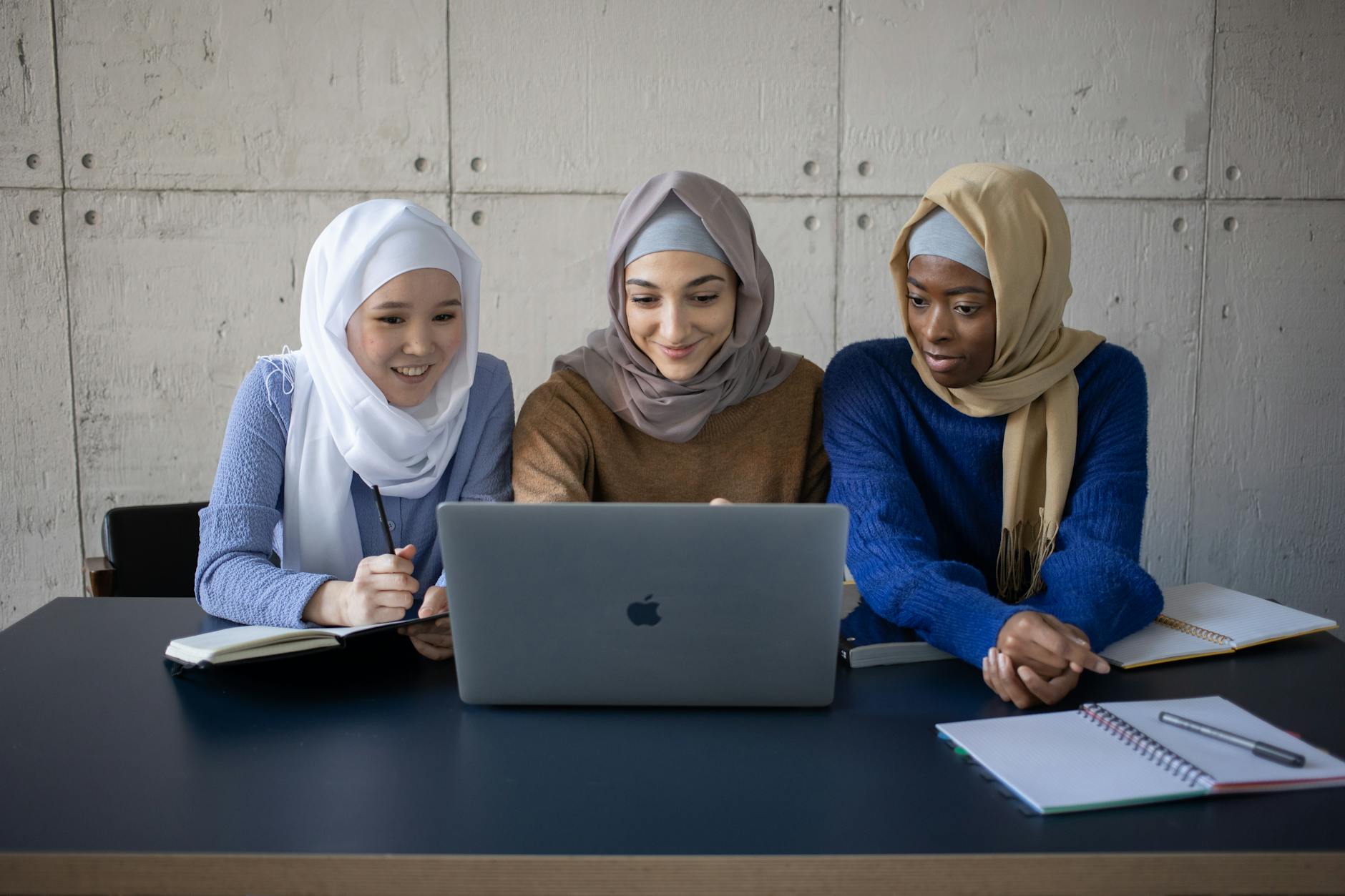
Islamic parenting emphasizes beneficial knowledge (ilm). Parents should ensure their children’s education integrates both worldly and religious learning. Understanding Qur’an, Hadith, and Seerah should not be confined to weekend classes; it should be woven into everyday life. Discussions about honesty, justice, or compassion can be related to Qur’anic stories, helping children connect principles to real behavior.
In addition, parents should cultivate critical thinking and curiosity. A child who understands the wisdom behind Islamic teachings will hold on to them more firmly than one who follows blindly. In a world of misinformation, nurturing intelligent, spiritually aware youth is a vital defense against confusion and doubt.
7. Nurturing Emotional Connection with Allah
Beyond knowledge, children must develop an emotional bond with Allah, to love Him, fear disappointing Him, and find peace in His remembrance. This is achieved through gentle reminders of Allah’s mercy, not threats of punishment. Parents can help children notice Allah’s signs in nature, express gratitude, and make personal dua. Encouraging them to speak to Allah about their worries creates a deep sense of companionship with Allah.
8. Parenting with Mercy and Consistency
Parenting in Islam is an act of worship. The Prophet (peace be upon him) said, ‘He is not one of us who does not show mercy to our young and respect to our elders.‘ [3]. Mercy does not mean permissiveness; it means guiding with compassion. Discipline should be consistent, fair, and rooted in love, never in anger or humiliation. When children feel secure and loved, they are more receptive to moral guidance.
9. Facing Modern Challenges with Faith
Social media, materialism, and moral confusion test every Muslim family today. Yet these challenges also offer opportunities. Parents can use technology wisely, watching Islamic lectures together, sharing beneficial content, or teaching digital responsibility. Setting boundaries, such as time limits and content filters, should be combined with open conversation so that children learn self-control rather than just obedience.
10. Parenting as a Lifelong Dua
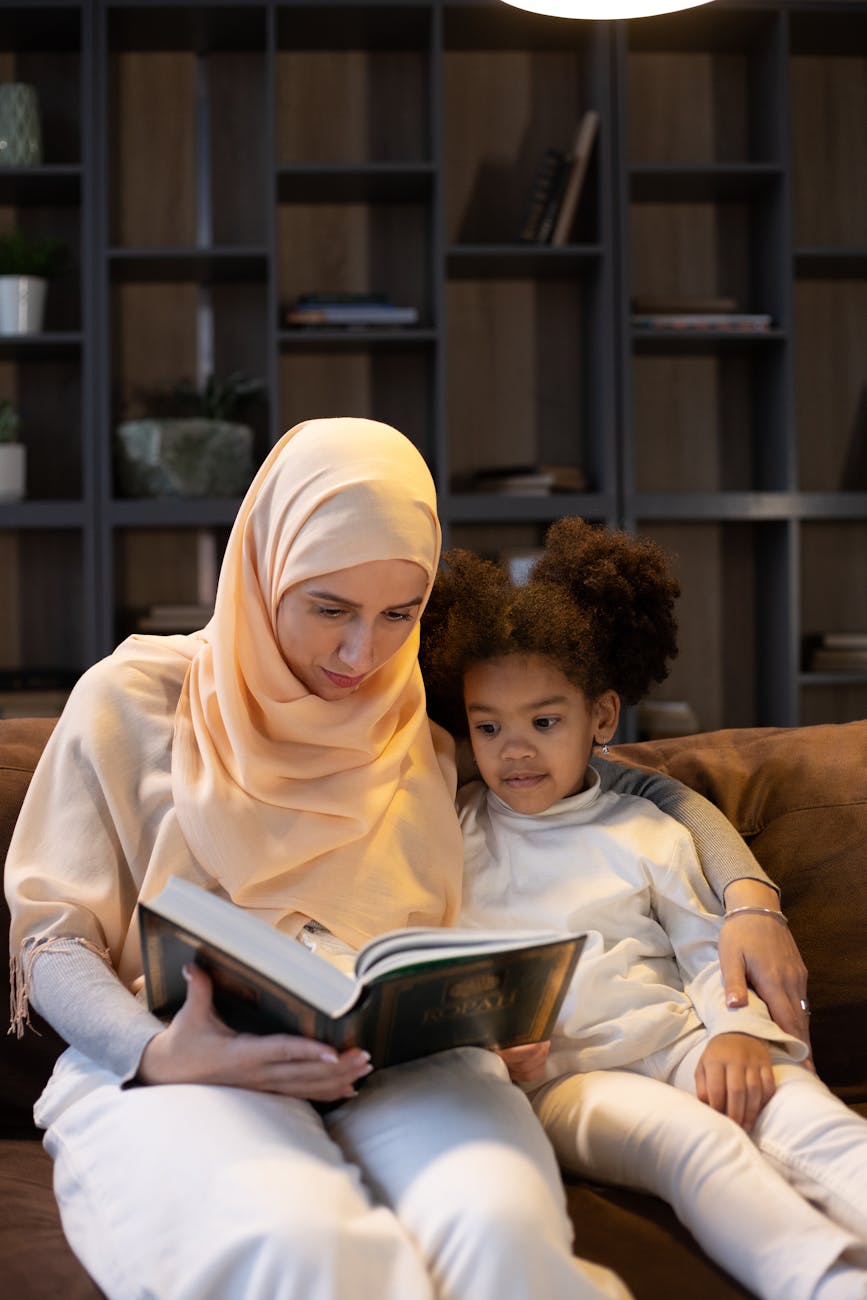
Raising righteous children is not a short-term project but a lifelong prayer. Just as Prophet Ibrahim (peace be upon him) prayed, ‘My Lord, make me an establisher of prayer, and (many) from my descendants‘[4], Muslim parents today must continuously ask Allah for guidance and patience. The hadith reminds us that while every child is born pure, parents shape that purity into faith or deviation.
By living consciously, teaching with love, modeling humility, and balancing body and soul, parents can raise a generation that remembers Allah in all deeds, strong Muslims, humble servants, and lights for humanity.

[1] Sahih Muslim 2659a, Book 46, Hadith 40
[2] Mishkat al-Masabih 3252, 3253, Book 13, Hadith 170
[3] Sunan At-Tirmidhi (1919)
[4] Surah Ibrahim 14:40
 knowledgedunes.com